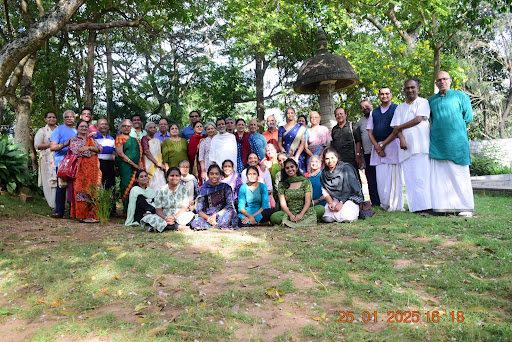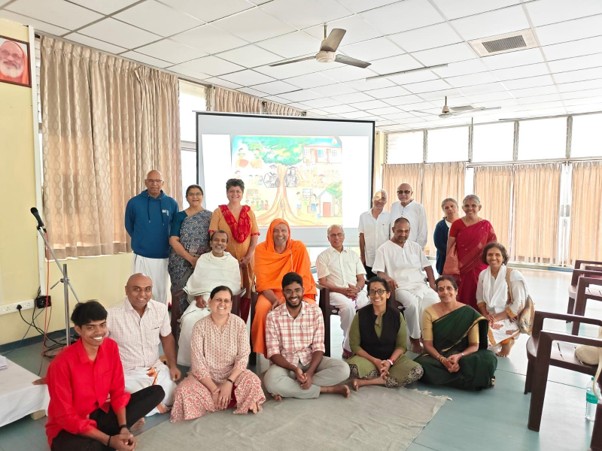
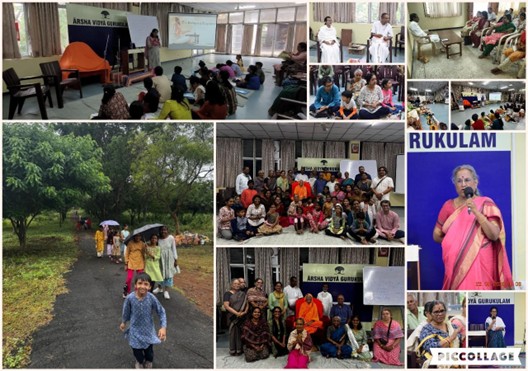
Arsha Seva Kendram organised this immersive summer camp under the able leadership of Acharyas Dr. Jayakumar Srinivasan Ammangudi and Mr. Srinivasan, both students of Swami Dayananda Saraswati (website). The camp aimed to provide participants with a deeper understanding of traditional Hindu philosophies and practices, creating an atmosphere of community and cultural appreciation. With a range of activities including yoga, meditation, and discussions on ancient texts, attendees were encouraged to explore their spiritual journeys in a supportive environment.
The meaning of “Arsha Vidya Gurukulam” is translated as “A place of receiving knowledge given by the Rishis”. This nurturing space fosters the transmission of wisdom from ancient sages to modern seekers, emphasising the importance of experiential learning and personal growth. Participants leave with not only knowledge but also a renewed sense of purpose and connection to their heritage.
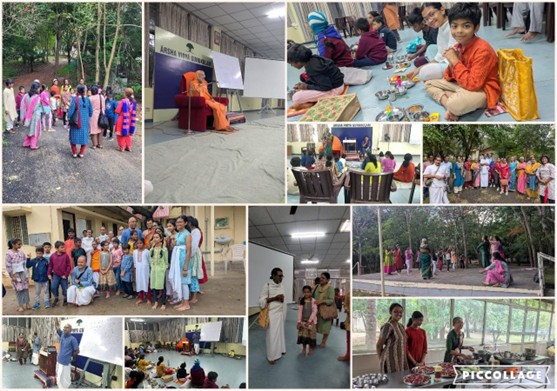
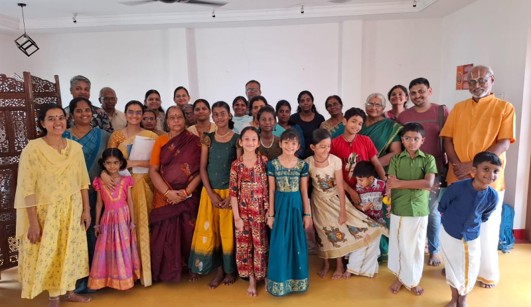
In an era of digital overload and hyperactivity, 30 unique children, aged 8 to 12 years, with their parents gathered at Arsha Vidya Gurukulam, Anaikatti, Coimbatore, for a two-and-a-half-day summer retreat( 23rd May 2025 to the first half of 25th May 2025) that promised something different — a holistic, joyful, and grounding experience in the lap of tradition.
This wasn’t just another summer camp. It was a celebration of Indic living, an immersion into the treasures of the Indian Knowledge Systems (IKS), and a heartfelt effort to reconnect both children and their parents with time-tested values.
What set this camp apart was its inclusive, family-oriented approach. While children learned to appreciate tradition in a fun, experiential format, parents were taught Advaita Vedanta and insights into the essential aspects of Sanatana Dharma, while appreciating the urgent need in the current society for Hindu families to rediscover their identity and goals. This term refers to physical and mental health. Health is a byproduct of the teachings of Advaita Vedanta, but not the direct teaching. Rather than just passive observers, parents became active co-learners, walking the path of inner transformation alongside their children.
As the camp concluded, there was a visible change — children humming slokas joyfully, children expressed their interest in attending winter camps, parents reflecting more mindfully, and families pausing to enjoy each other’s presence. The take-home wasn’t a certificate or a badge, but something far deeper:
A lived experience of India’s timeless wisdom — rooted, relevant, and radiant.